
Conversion Rate Optimization (CRO): Turn Website Traffic Into Sales
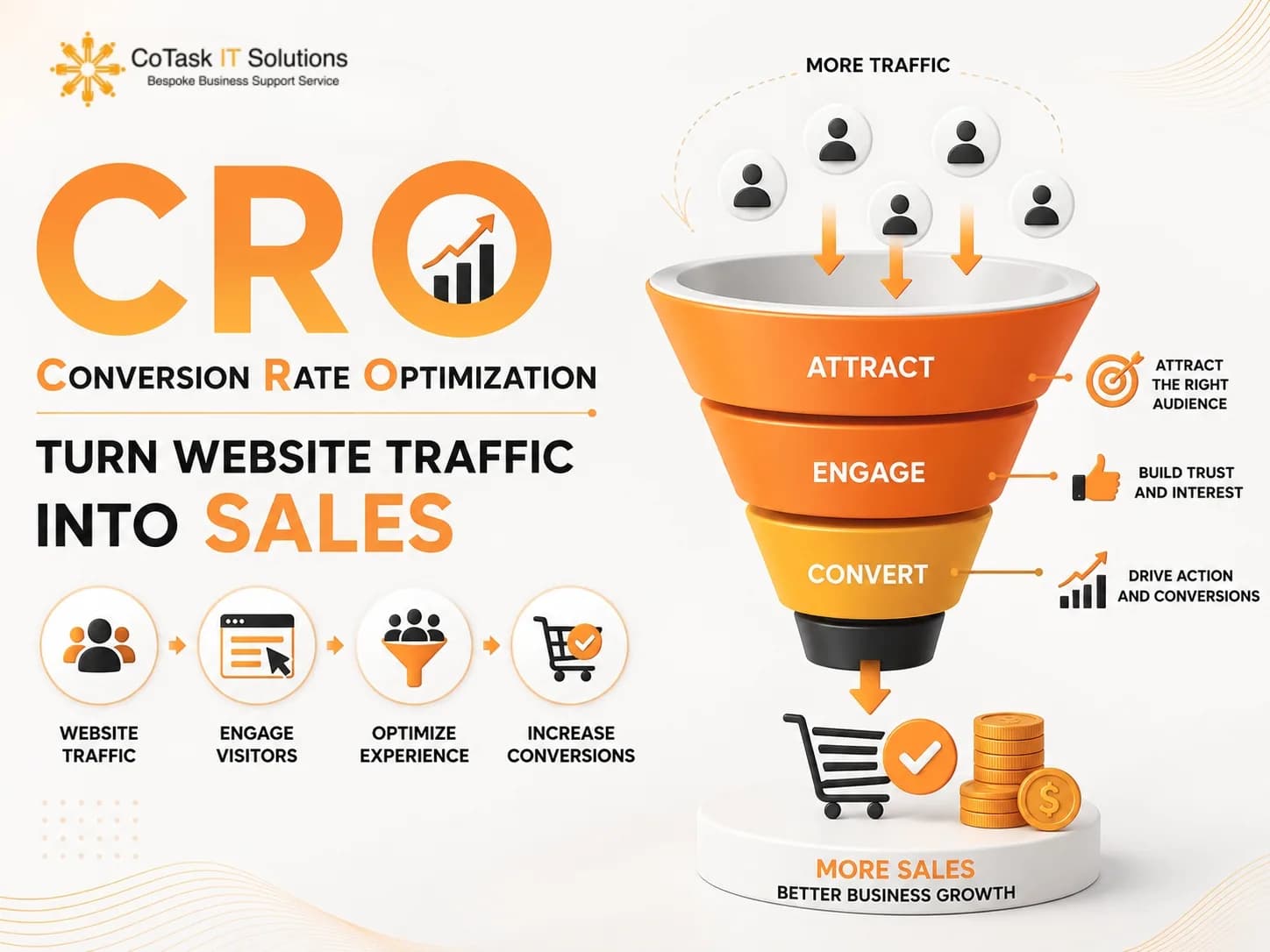
Getting traffic to your website has never been easier — or more expensive. In 2025, businesses increased digital ad spend by roughly 13.2% year-over-year, yet average conversion rates actually fell by about 6.1% over the same period. Translation: brands are paying more to attract visitors who are statistically less likely to buy.
That gap is exactly where Conversion Rate Optimization (CRO) comes in. Instead of chasing more traffic, CRO focuses on getting more value out of the traffic you already have — the visitors already on your site, already interested, already one step away from becoming a customer.
This guide breaks down what CRO actually is, why it matters more in 2026 than ever before, and the specific, data-backed strategies that turn browsers into buyers.
What Is Conversion Rate Optimization?
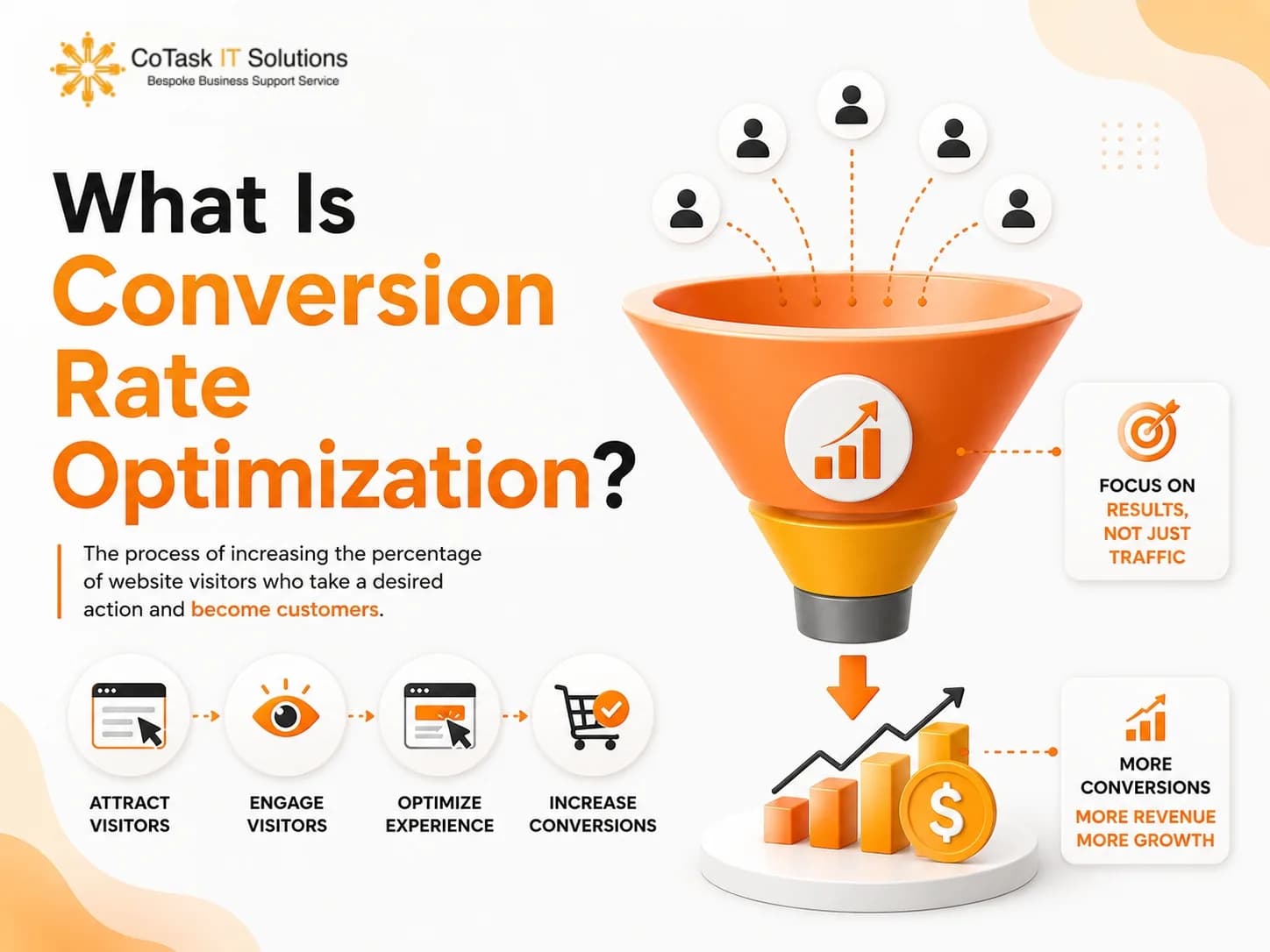
Conversion Rate Optimization (CRO) is the systematic process of increasing the percentage of website visitors who complete a desired action — a purchase, a form submission, a demo request, a phone call, or a sign-up — without needing to increase traffic.
CRO works by identifying where visitors lose interest or hit friction (a confusing layout, a slow page, an untrustworthy checkout, a form that asks for too much) and then testing changes to remove that friction. It sits at the intersection of web design, copywriting, user psychology, and data analysis.
How Do You Calculate Conversion Rate?
The formula is simple:
Conversion Rate = (Number of Conversions ÷ Total Visitors) × 100
For example, if your website had 10,000 visitors last month and 250 of them made a purchase, your conversion rate is 2.5%.
Why Does Conversion Rate Optimization Matter in 2026?
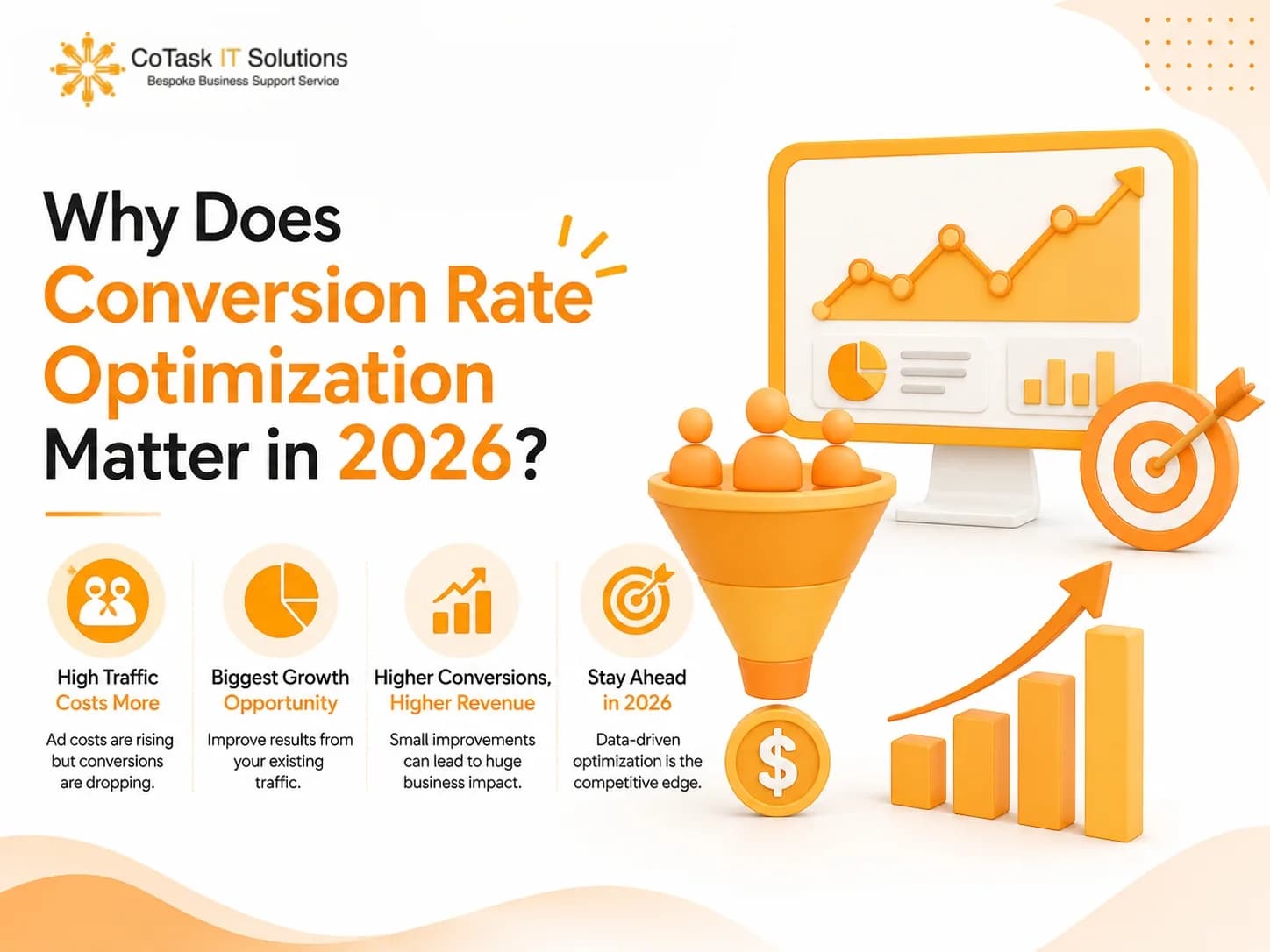
Most businesses default to solving a traffic problem with more traffic — more ads, more content, more keywords. But traffic without conversion is just an expensive spectator count. A few numbers make the case plainly:
- The average website conversion rate across industries sits between 2% and 3%, according to 2026 benchmark aggregates from Contentsquare and WordStream — meaning roughly 97 to 98 out of every 100 visitors leave without converting.
- The top 10% of websites convert at 11.45% or higher — over five times the average — almost entirely due to deliberate optimization, not better products.
- The average cart abandonment rate sits at 70.22%, based on Baymard Institute's meta-analysis of nearly 50 independent studies. Baymard estimates that fixing checkout-usability issues alone could recover approximately $260 billion in orders across the US and EU.
- Nearly half of all cart abandonments (48%) happen because of unexpected costs revealed at checkout — shipping fees, taxes, or charges that weren't visible earlier in the journey (Baymard Institute).
In other words: for most businesses, the biggest untapped growth channel isn't a new ad platform. It's the traffic already arriving at their site every single day.
The CRO Funnel: Where Visitors Actually Drop Off
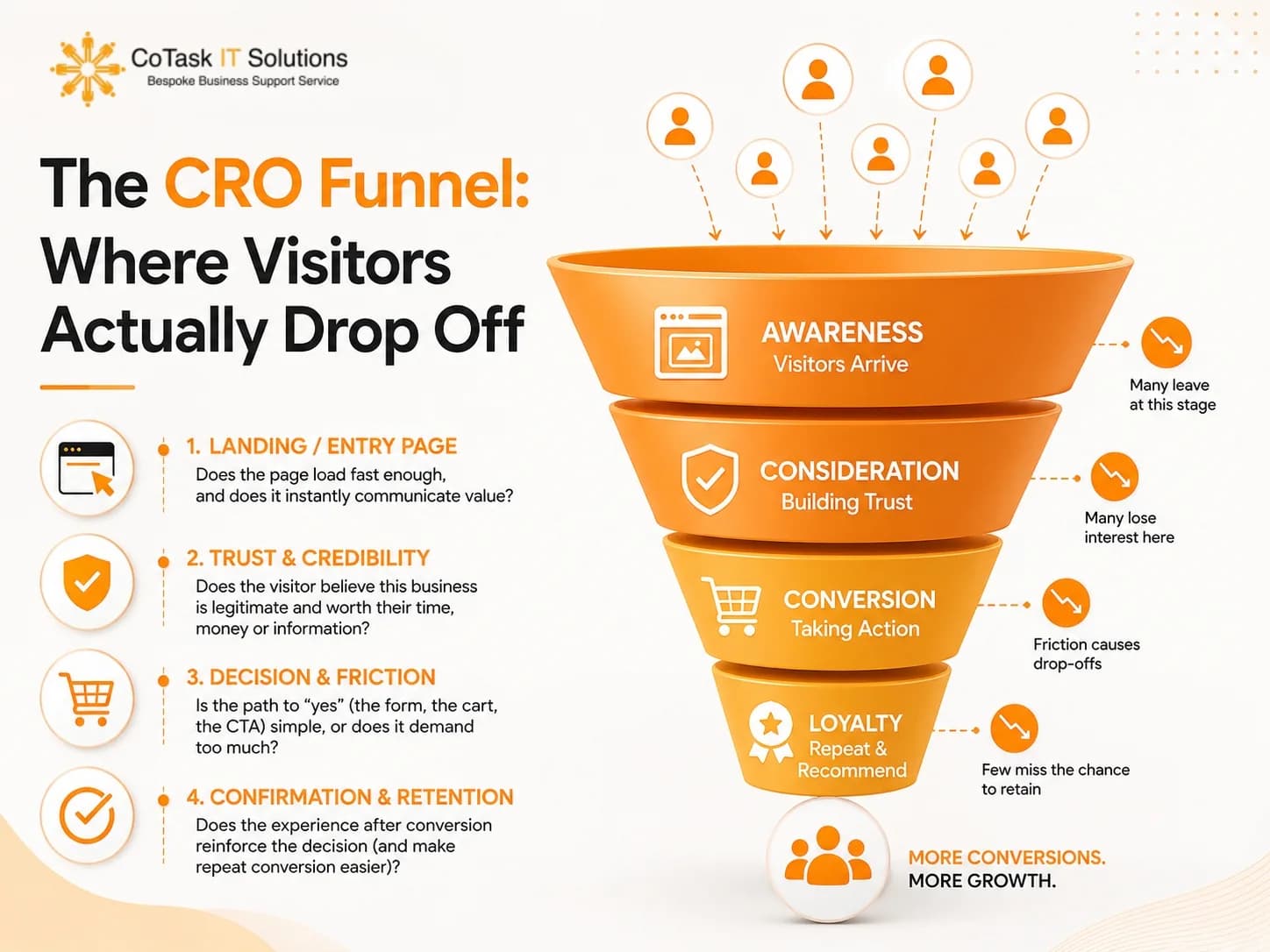
Before jumping into tactics, it helps to see conversion as a funnel with distinct failure points:
- Landing/Entry Page — Does the page load fast enough, and does it instantly communicate value?
- Trust & Credibility — Does the visitor believe this business is legitimate and worth their money or information?
- Decision & Friction — Is the path to "yes" (the form, the cart, the CTA) simple, or does it demand too much?
- Confirmation & Retention — Does the experience after conversion reinforce the decision (and make repeat conversion easier)?
A weak link at any stage caps your overall conversion rate — which is why CRO isn't a single fix but an ongoing, tested process. Our full breakdown of this funnel, including page-by-page fixes, is covered in our landing page optimization guide.
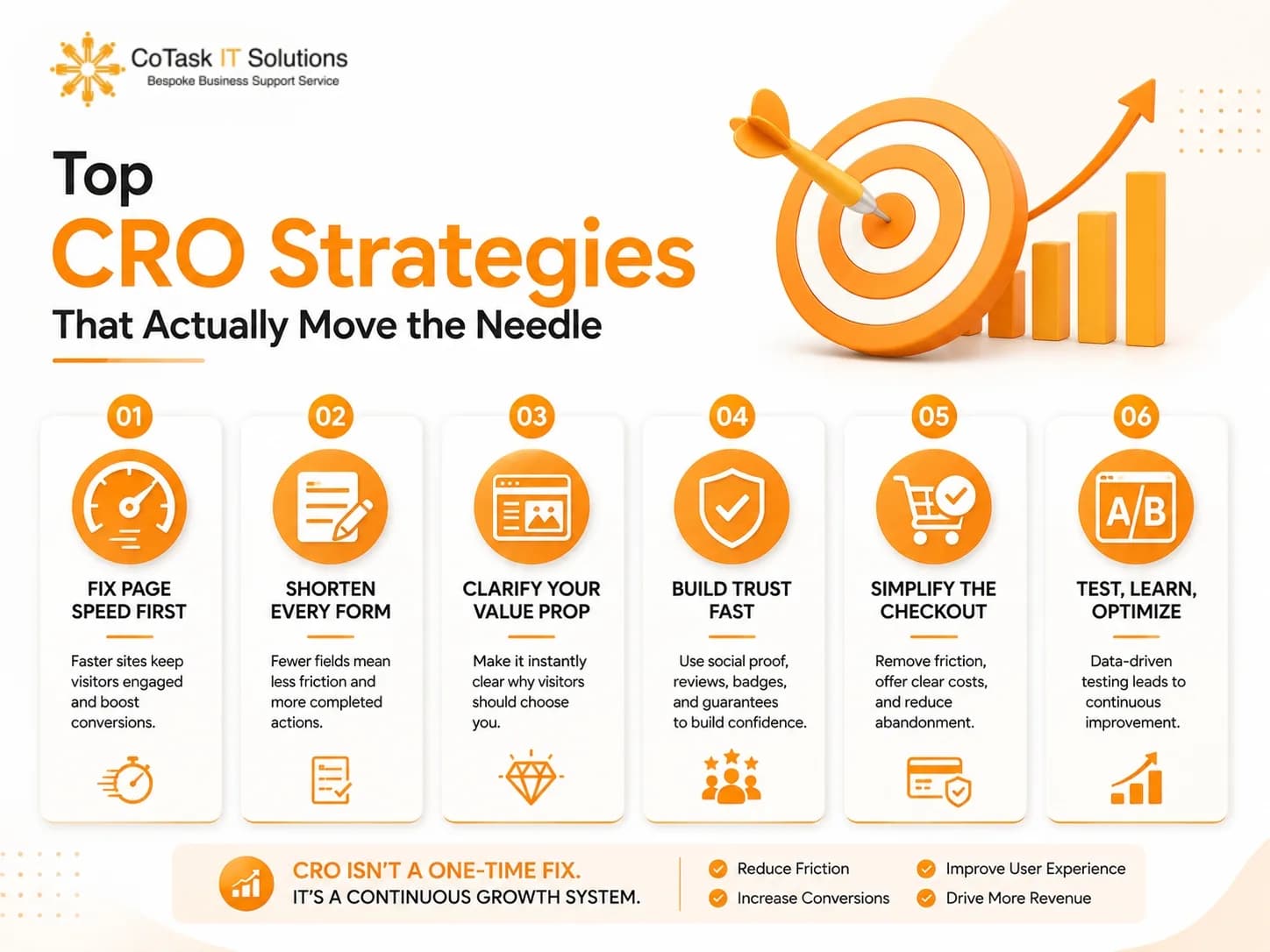
Top CRO Strategies That Actually Move the Needle
1. Fix Page Speed First
Speed is consistently one of the highest-leverage CRO levers available. According to the widely cited Google and Deloitte "Milliseconds Make Millions" study, a mere 0.1-second improvement in mobile load time increased retail conversion rates by 8.4% and travel conversion rates by 10.1%. Separately, conversion rates have been shown to fall from roughly 40% at a 1-second load time down to around 29% at 3 seconds — a steep drop for just two extra seconds.
If your pages are slow, no amount of copywriting or design polish will fully compensate. For a complete technical breakdown, see our website speed optimization guide.
2. Shorten Every Form
Form length is one of the most measurable conversion levers in existence. Research from Imagescape found that shortening a form from 11 fields to 4 produced a 120% increase in completed submissions. Separately, 2026 benchmark data shows form completion rates fall sharply once a form exceeds 5 fields, and collapse further past 7.
Ask only for what you need at that stage of the relationship — you can always collect more information later.
3. Add Real Social Proof, Not Generic Testimonials
Trust signals — reviews, testimonials, case studies, client logos — consistently lift conversions, with documented ranges from roughly 19% up to over 300% depending on placement, format, and specificity. Testimonials that include a real name, title, and specific outcome ("increased qualified leads by 47%") consistently outperform vague, anonymous praise. Interestingly, research from Northwestern University's Spiegel Research Center found that purchase likelihood tends to peak around a 4.2–4.5 star rating rather than a perfect 5.0 — shoppers trust authenticity over perfection.
4. Design for Mobile Friction First
Mobile traffic now represents the majority of visits for most businesses, yet mobile consistently converts at roughly half the rate of desktop (desktop conversion rates average around 5% versus roughly 2.5% on mobile, per 2025–2026 WordStream data). The gap isn't about intent — it reflects friction: harder-to-tap buttons, cramped checkout fields, and payment steps that feel riskier on a small screen. If your CRO strategy doesn't start mobile-first, you're optimizing for a shrinking share of your audience. Our website design mistakes guide covers the specific UX issues costing businesses leads.
5. Remove Unnecessary Navigation on Conversion Pages
Every navigation link, footer menu, and unrelated CTA on a dedicated landing page is an exit ramp. Pages built around a single goal — sign up, buy, book a call — consistently convert better when distractions are stripped away, since every additional option divides visitor attention and intent.
6. Fix Checkout Before You Fix Anything Else (Ecommerce)
For ecommerce businesses specifically, checkout is where the highest-value drop-off happens. Beyond unexpected costs, common abandonment drivers include mandatory account creation and checkouts that feel too long or complex. Simple, high-leverage fixes include:
- Displaying total cost (including shipping and tax) before the final checkout step
- Enabling guest checkout as the default
- Offering multiple payment methods — businesses offering digital wallets and flexible payment options have reported meaningfully higher conversion rates as a result
7. Test Everything — Don't Guess
Companies that run structured A/B tests see an average conversion lift of around 49%, yet only a small minority of marketers actively test their landing pages. The businesses winning at CRO in 2026 aren't guessing at what "feels" better — they're testing headlines, CTAs, form lengths, and page layouts against real visitor behavior and letting the data decide.
8. Personalize the Call-to-Action
Generic, one-size-fits-all CTAs consistently underperform. Personalized CTAs — tailored to a visitor's traffic source, stage in the funnel, or previous behavior — have been documented to convert over 200% better than generic versions in some studies. You don't need a fully custom experience for every visitor; even basic segmentation (new vs. returning, or by traffic source) produces a measurable lift.
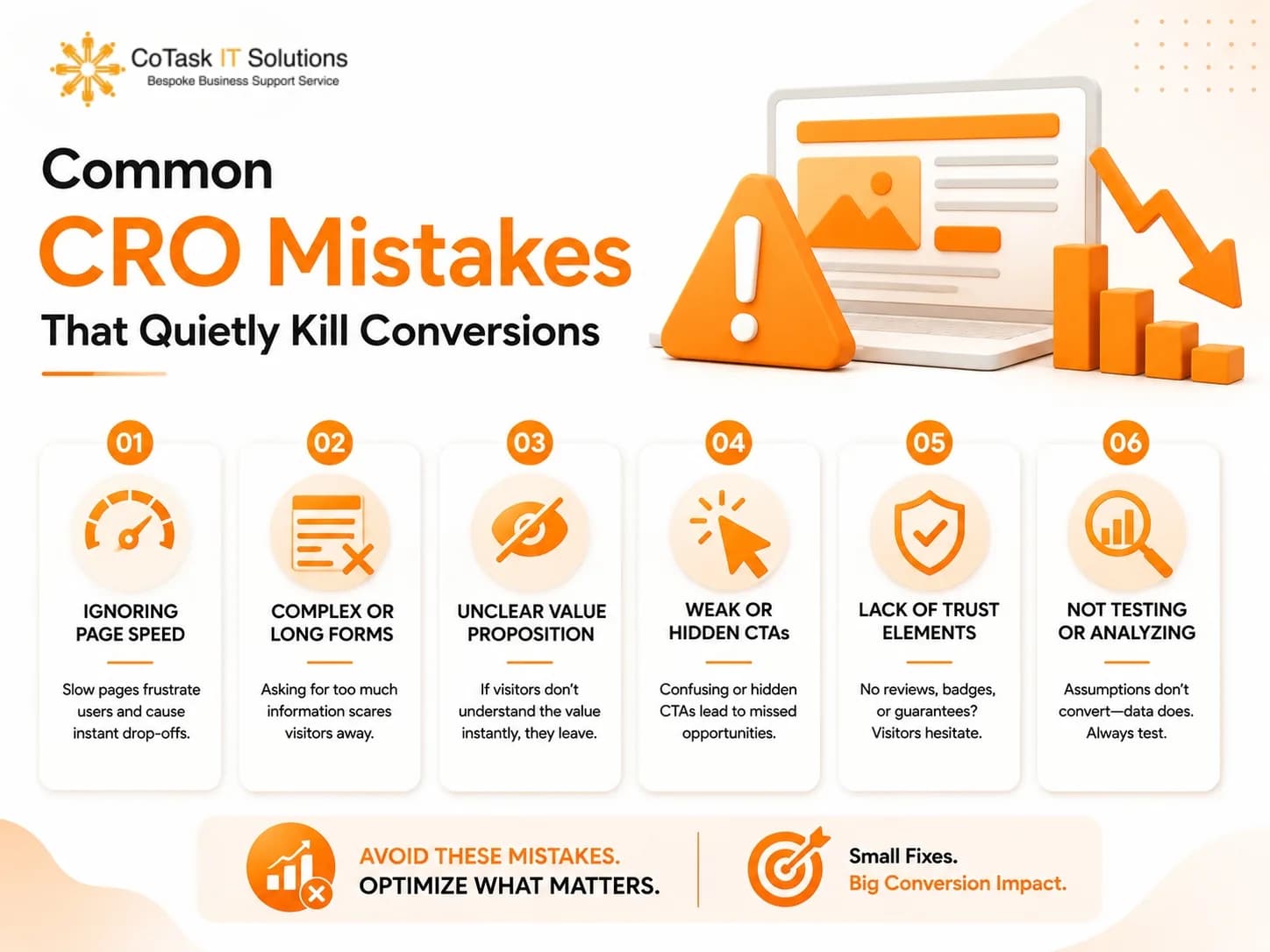
Common CRO Mistakes That Quietly Kill Conversions
Even well-intentioned websites make avoidable errors that suppress conversion rates:
- Treating the homepage like a landing page. Homepages serve many audiences; landing pages should serve one specific intent.
- Optimizing for aesthetics over clarity. A beautiful page that doesn't explain the offer in the first five seconds will still lose visitors.
- Ignoring page speed on mobile while only testing on a fast office Wi-Fi connection.
- Running ads to a slow or cluttered page, which wastes ad spend before CRO even gets a chance to work — a pattern we cover in depth in our Google Ads mistakes guide.
- Never diagnosing why traffic isn't converting in the first place. If you're seeing healthy traffic but weak results, our guide on why your website isn't generating leads walks through the most common root causes.

CRO for UAE, GCC & Multi-Market Businesses
CRO isn't one-size-fits-all — regional buying behavior changes what actually moves conversion rates. The UAE's ecommerce market is projected to be worth over $12 billion in 2026, with more than 11 million online shoppers and roughly 78% digital penetration, among the highest in the region. Two regional realities matter specifically for CRO here:
- Payment trust is still a live issue. Across the wider Middle East, a significant share of consumers still prefer cash on delivery over digital payment, reflecting lingering trust gaps in some segments. For UAE and GCC businesses, this makes visible trust signals, secure-payment badges, and flexible payment options (including COD where feasible) a genuine conversion lever — not just a nice-to-have.
- Digital wallets are rising fast. Wallet-based payments now account for over half of UAE transactions, up sharply in just a few years. Businesses that haven't added wallet options to checkout are leaving conversions on the table.
For multi-market brands running the same site across the US, UAE, UK, Saudi Arabia, and beyond, this also means your CRO testing shouldn't be pooled — a form length, payment method, or trust signal that lifts conversions in one market may underperform in another. This is one of the reasons structural fixes like hreflang and market-specific landing pages (rather than one generic global page) tend to outperform a single template.
CRO Tools & Methodology
You don't need a massive martech stack to start. A focused CRO process typically includes:
- Heatmaps & session recordings (to see where visitors click, scroll, and drop off)
- A/B or split-testing tools (to validate changes against real behavior, not opinion)
- Analytics with clean goal/event tracking (so "conversion" is measured consistently — see our Google Search Console guide if your tracking setup needs a foundation)
- On-site surveys or exit-intent polls (to hear, in visitors' own words, why they didn't convert)
The methodology matters more than the tool: identify the highest-traffic, highest-friction page → form a hypothesis → test one meaningful change at a time → measure → repeat.
Quick CRO Checklist
- Page loads in under 2–3 seconds on mobile
- Above-the-fold content answers "what is this and why should I care?" within 5 seconds
- Forms ask for 5 fields or fewer wherever possible
- At least one specific, named testimonial or review is visible near the CTA
- Total cost (including shipping/tax) is shown before final checkout
- Guest checkout is available
- Mobile tap targets and checkout fields are easy to use one-handed
- Landing pages built for ads/campaigns have no distracting navigation
- At least one active A/B test is running at all times
- CTAs are tailored by traffic source or funnel stage, not generic
Frequently Asked Questions
Turning This Into Action
Conversion Rate Optimization isn't a one-time redesign — it's an ongoing discipline of testing, measuring, and refining based on real visitor behavior. The businesses winning in 2026 aren't necessarily the ones with the most traffic; they're the ones converting the highest percentage of the traffic they already have.
If you're driving visitors to your site but not seeing the sales, leads, or bookings to match, the fix usually isn't more spend — it's a structured CRO audit. CoTask IT Solutions works with 200+ brands across the USA, UAE, UK, Saudi Arabia, and beyond, combining SEO, PPC, and CRO into one connected growth strategy rather than treating traffic and conversion as separate problems.
Ready to see where your website is leaking conversions? Get a free CRO audit from CoTask →