
Is SEO Dead? Why SEO Will Never Die in the Age of AI (2026 Guide)
Introduction
Every few years, a new headline appears claiming that SEO is dead. First it was social media, then mobile apps, then voice search, and now it's artificial intelligence. With the rise of AI-powered tools like ChatGPT, Google AI Overviews, Gemini, and Perplexity, many businesses are asking the same question:
"Is SEO dead?"
The short answer is no.
SEO is not disappearing - it is evolving. The way people search for information has changed, and businesses must adapt to these changes. Traditional keyword optimization alone is no longer enough. Today, successful websites combine Search Engine Optimization (SEO) with Answer Engine Optimization (AEO) and Generative Engine Optimization (GEO) to remain visible across search engines and AI-powered platforms.
In this guide, you'll learn why SEO still matters, why many people mistakenly believe it's dying, how AI is transforming search, and what you should do to future-proof your digital marketing strategy.
Table of Contents
- Introduction
- Is SEO Dead? (Quick Answer)
- What Is SEO?
- Why Do People Think SEO Is Dead?
- Why SEO Will Never Die
- How AI Is Changing Search
- SEO vs GEO vs AEO
- Future of SEO
- Frequently Asked Questions
- Conclusion
Is SEO Dead? (Quick Answer)
No, SEO is not dead.
Instead, SEO has evolved to meet changing search behavior and advancements in artificial intelligence.
Modern SEO focuses on much more than keywords. It includes:
- Understanding user intent
- Creating helpful, original content
- Building topical authority
- Improving website experience
- Using structured data
- Optimizing for AI-generated answers
- Answering users' questions clearly
Think of SEO as the foundation of online visibility. While AI tools change how information is presented, they still rely on high-quality web content to generate accurate responses.
Key Takeaway: SEO is no longer just about ranking on Google—it's about being discoverable wherever people search, including AI-powered platforms.
Search is no longer limited to Google's traditional results. AI platforms and answer engines are changing how people discover content. If you want to understand where search is heading, read our detailed guide on: The Future of SEO: Why Ranking on Google Isn't Enough Anymore
What Is SEO?
SEO, or Search Engine Optimization, is the process of improving your website so that it appears higher in search engine results when people search for relevant topics, products, or services.
The goal of SEO is to attract organic traffic, meaning visitors who find your website without paid advertising.
The Three Core Pillars of SEO
1. On-Page SEO
This involves optimizing the content and structure of your website.
Examples include:
- Writing helpful content
- Optimizing title tags
- Using relevant keywords naturally
- Creating descriptive headings
- Adding internal links
- Optimizing images
2. Technical SEO
Technical SEO ensures that search engines can easily crawl, understand, and index your website.
Examples include:
- Fast loading speed
- Mobile-friendly design
- Secure HTTPS connection
- XML sitemap
- Structured data
- Clean website architecture
3. Off-Page SEO
Off-page SEO focuses on improving your website's authority through external signals.
Examples include:
- High-quality backlinks
- Brand mentions
- Online reviews
- Digital PR
- Social signals
Why SEO Matters
A well-optimized website can:
- Increase organic traffic
- Build brand credibility
- Generate qualified leads
- Improve user experience
- Reduce advertising costs over time
- Deliver long-term results
SEO isn't a one-time task—it's an ongoing strategy that grows stronger with consistent effort.
Why Do People Think SEO Is Dead?
If SEO is still effective, why do so many people believe it's dying?
The answer lies in how search has evolved.
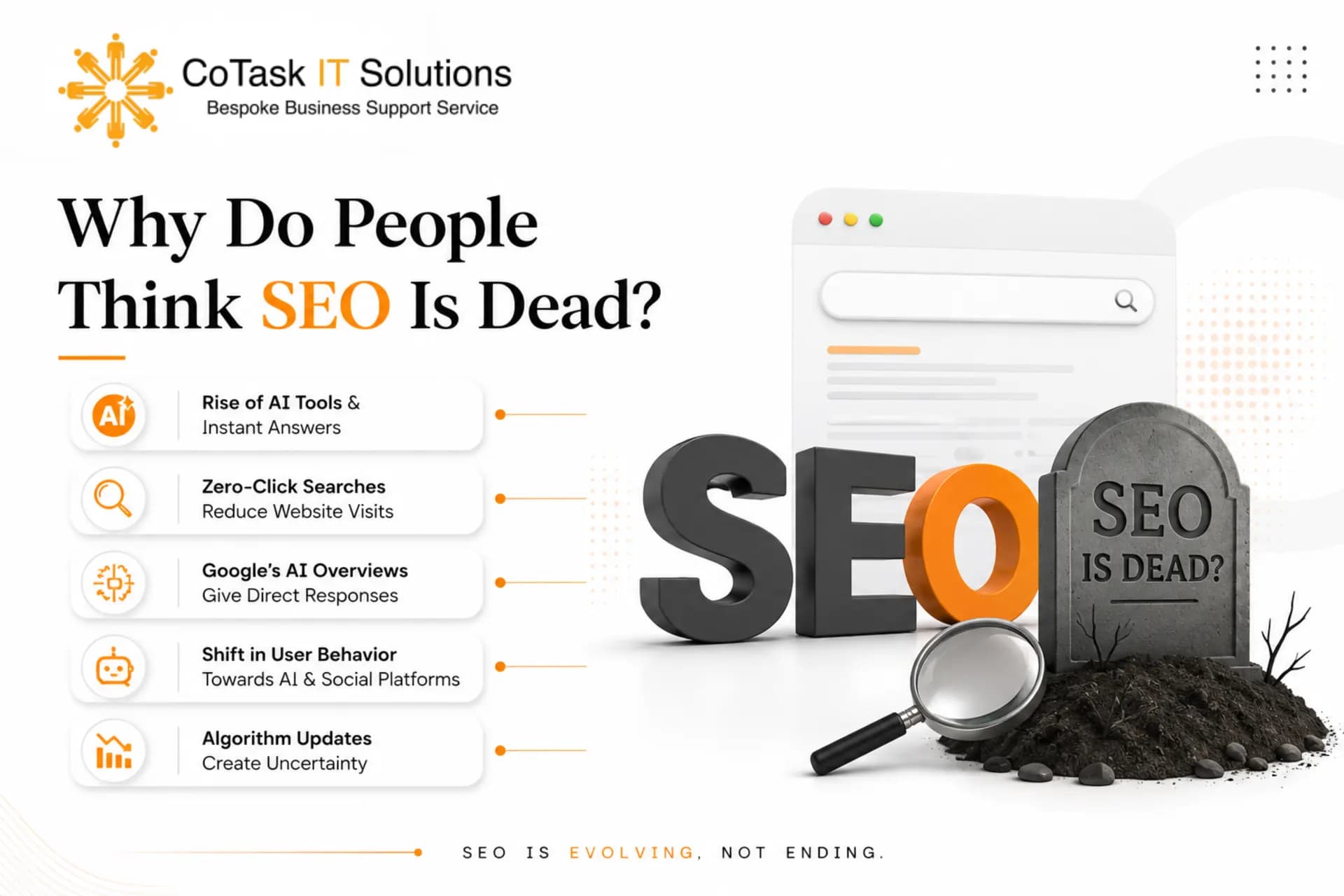
1. AI-Powered Search Results
Search engines now provide direct answers instead of simply listing websites.
Features like AI-generated summaries can satisfy users without requiring them to click through to a webpage.
This has led some marketers to believe websites are becoming less important.
2. Zero-Click Searches
Many searches now end without the user clicking on any website.
For example:
Search: "What is SEO?"
Google may display:
- AI Overview
- Featured Snippet
- Knowledge Panel
- People Also Ask
Users often find the information they need directly on the search results page.
Although this reduces clicks for some queries, it doesn't eliminate the need for high-quality content. Those answers are typically generated from trustworthy websites.
3. Constant Google Updates
Google regularly updates its ranking systems.
These updates can cause websites to gain or lose visibility, making SEO feel unpredictable.
However, most updates reward websites that provide valuable, accurate, and user-focused content.
4. Outdated SEO Practices
Many businesses still rely on techniques that no longer work.
Examples include:
- Keyword stuffing
- Buying backlinks
- Duplicate content
- Thin articles
- Clickbait headlines
When these outdated strategies fail, people assume SEO itself has stopped working.
The reality is that poor SEO practices are ineffective—not SEO as a discipline.
5. The Rise of AI Tools
AI assistants have changed how people search for information.
Instead of typing keywords into a search engine, users can ask complete questions such as:
- Is SEO dead?
- How can I improve my website rankings?
- What's the difference between SEO and GEO?
This shift has introduced new optimization strategies like AEO and GEO, but it hasn't replaced SEO.
Why SEO Will Never Die
SEO has survived every major change in digital marketing.
It adapted to:
- Mobile-first indexing
- Voice search
- Local search
- Video search
- Core Web Vitals
- AI-powered search
Every time a new technology emerged, experts predicted the end of SEO. Instead, SEO evolved.
The reason is simple:
People will always search for information.
Whether they use Google, ChatGPT, Gemini, Perplexity, or another AI platform, these systems still depend on reliable, high-quality content published on the web.
Without well-written websites, AI models would have far fewer trustworthy sources to reference.
That means businesses that invest in creating helpful, accurate, and authoritative content will continue to benefit—not just from traditional search engines, but also from AI-driven search experiences.
AI is reshaping search faster than ever. To explore what this means for businesses, check out our article on the future of SEO.
SEO vs GEO vs AEO: What's the Difference?
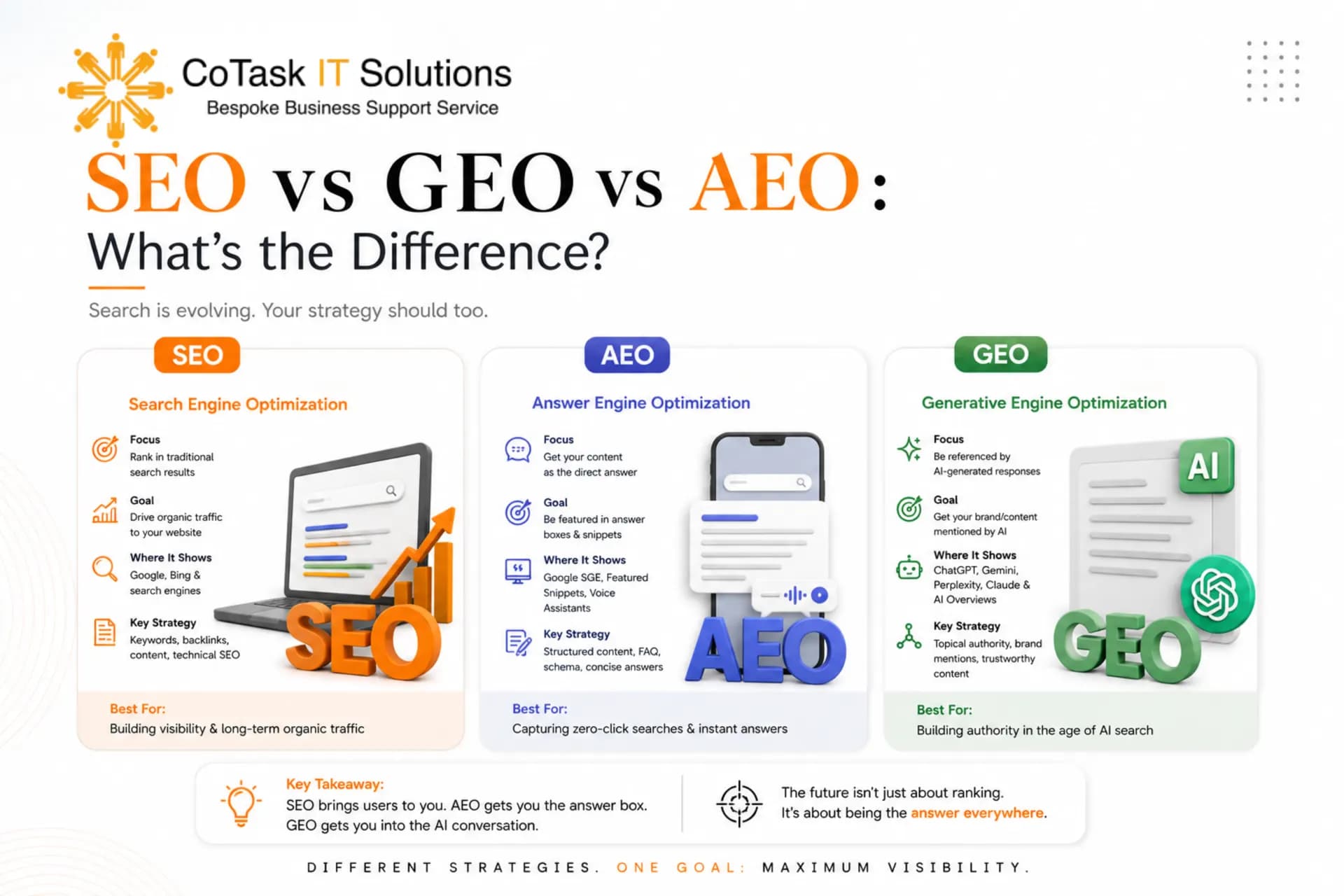
As search technology evolves, businesses need to understand that SEO, GEO, and AEO are not competitors—they work together. Each one focuses on a different way users discover information.
- SEO (Search Engine Optimization) — Primary Goal: Rank higher on search engines. Platforms: Google, Bing. Focus: Keywords, content, technical optimization. Best For: Website traffic.
- AEO (Answer Engine Optimization) — Primary Goal: Provide direct answers. Platforms: Voice assistants, Featured Snippets, AI Overviews. Focus: Questions and concise answers. Best For: Quick answers.
- GEO (Generative Engine Optimization) — Primary Goal: Increase visibility in AI-generated responses. Platforms: ChatGPT, Gemini, Perplexity, Copilot. Focus: Context, authority, and semantic understanding. Best For: AI citations and recommendations.
Why Businesses Need All Three
Think of it this way:
- SEO helps users find your website.
- AEO helps search engines answer users' questions.
- GEO helps AI assistants understand and reference your content.
Instead of replacing SEO, AEO and GEO extend your visibility across modern search experiences.
How AI Is Changing Search
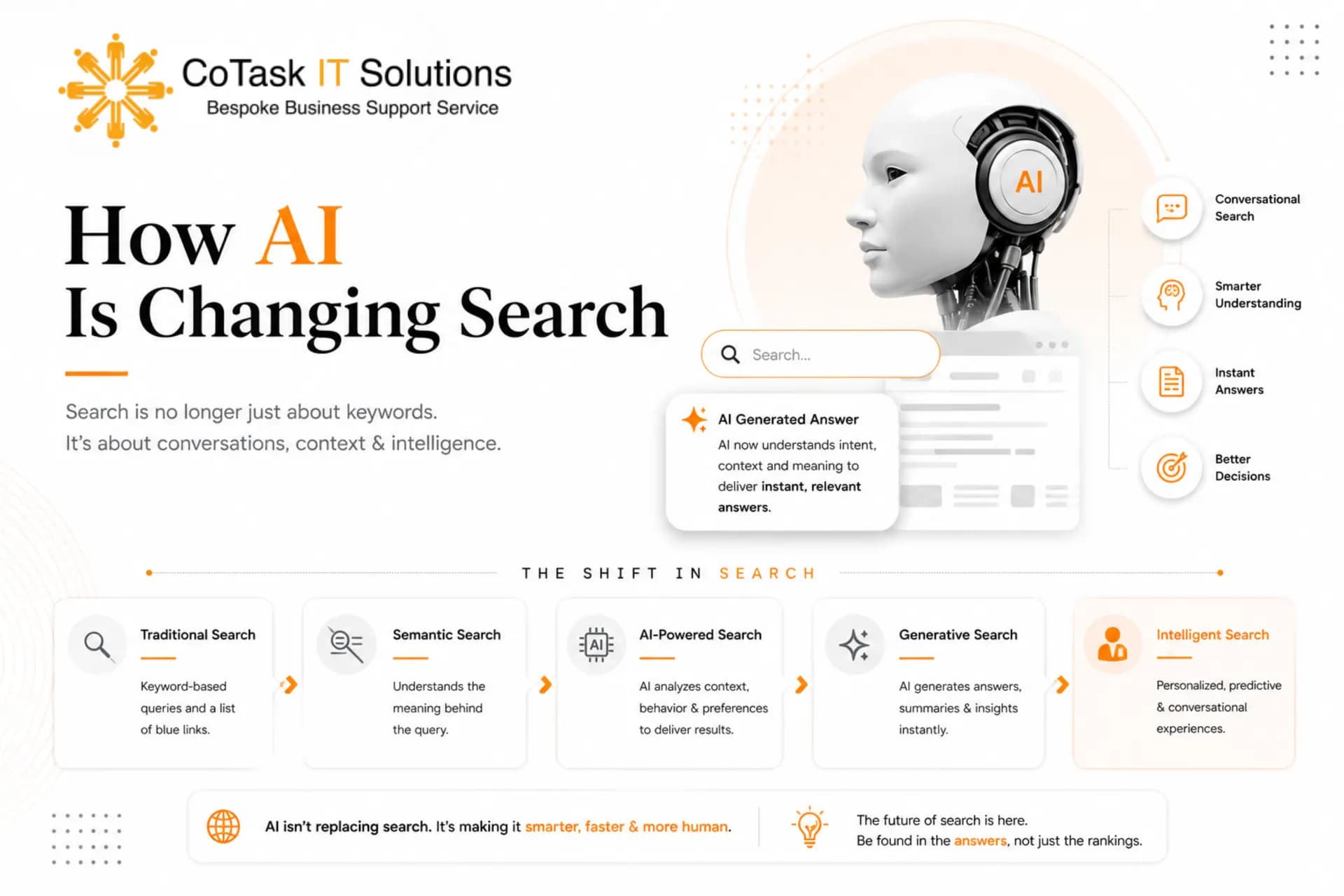
Artificial intelligence has changed how people interact with search engines.
In the past, users typed short keywords like:
- Best digital marketing agency
- SEO tips
- Website design
Today, people ask complete questions such as:
- Is SEO dead in 2026?
- How can I rank in AI search?
- What is the difference between SEO and GEO?
AI-powered search engines analyze the intent behind these questions and generate conversational answers.
This means websites must focus on providing clear, trustworthy, and well-structured content rather than simply repeating keywords.
Understanding Google AI Overviews
Google AI Overviews (previously referred to as Search Generative Experience or SGE) summarize information directly on the search results page.
For example, if someone searches:
"Is SEO dead?"
Google may display:
- A summary explaining that SEO is evolving.
- Key reasons why businesses still need SEO.
- Links to trusted websites supporting the answer.
This changes user behavior, but it doesn't eliminate the importance of SEO. In fact, it increases the value of publishing authoritative content because AI systems need reliable sources to generate accurate summaries.
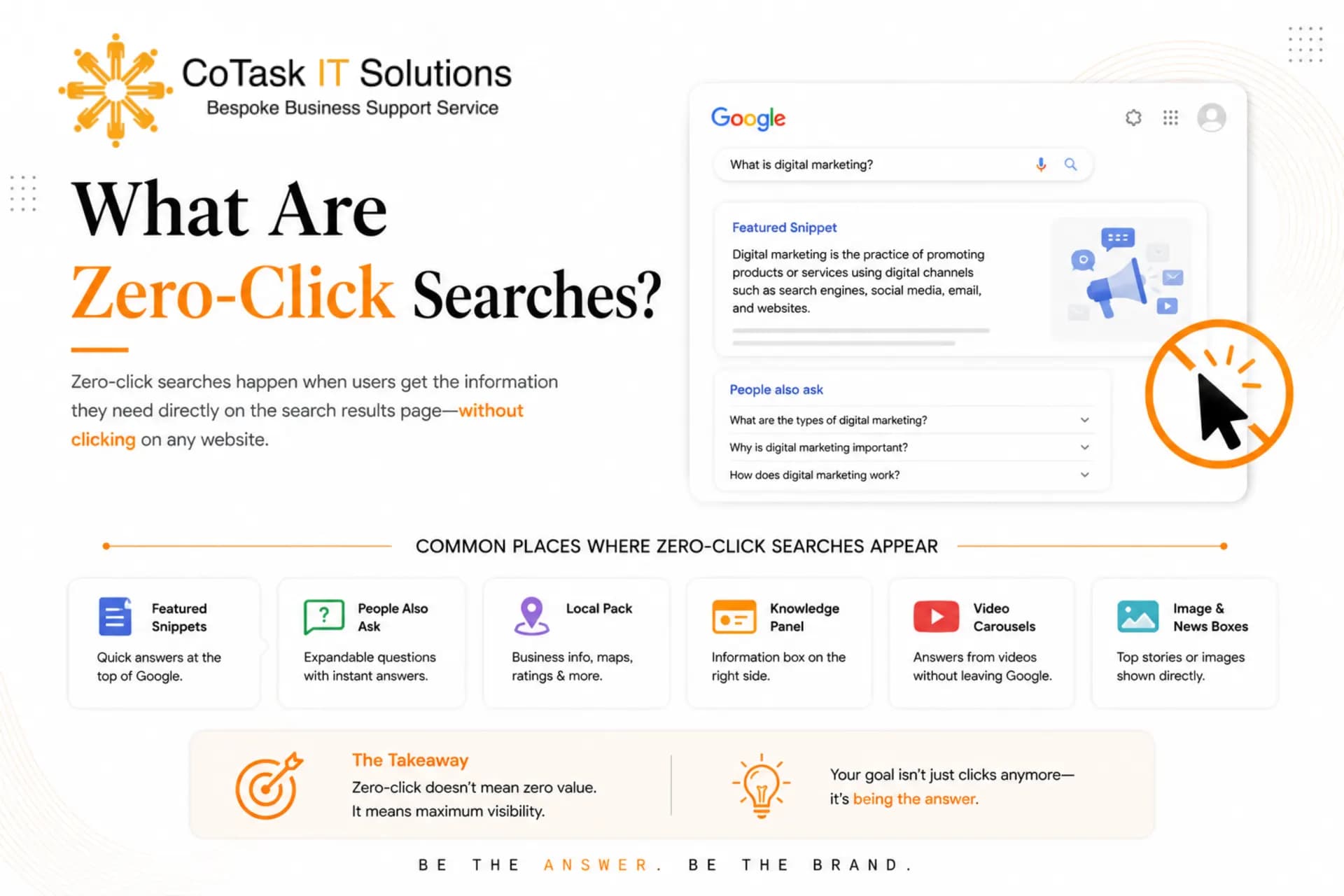
What Are Zero-Click Searches?
A zero-click search occurs when users receive the information they need without visiting a website.
Examples include:
- Weather forecasts
- Currency conversions
- Definitions
- Quick facts
- AI-generated summaries
While these searches may reduce clicks for simple queries, they also encourage businesses to create deeper, more valuable content that users will still visit for detailed guidance.
Instead of worrying about fewer clicks, focus on creating content that answers the initial question and then encourages users to explore further.
How to Optimize for AI Search
AI search doesn't ignore SEO—it builds upon it.
Here are practical strategies to improve your visibility in both traditional and AI-powered search.
1. Focus on User Intent
Don't just target keywords.
Understand:
- What problem is the user trying to solve?
- Why are they searching?
- What action do they want to take?
Content that satisfies user intent performs better across Google and AI platforms.
2. Answer Questions Clearly
Start each section with a direct answer before providing additional details.
For example:
Question: Is SEO dead?
Answer: No. SEO has evolved to include AI-driven search optimization, but it remains essential for online visibility.
This format helps both users and AI systems quickly understand your content.
3. Build Topical Authority
Instead of publishing one article about SEO, create a complete content ecosystem.
Related topics could include:
- What Is SEO?
- Technical SEO Checklist
- On-Page SEO Guide
- Off-Page SEO Strategies
- What Is AEO?
- What Is GEO?
- How AI Is Changing Search
- SEO Trends for 2026
This signals expertise and strengthens your website's authority.
4. Use Structured Headings
Well-organized headings make it easier for search engines and AI models to understand your content.
Example:
- H1: Is SEO Dead?
- H2: Why People Think SEO Is Dead
- H2: Why SEO Will Never Die
- H2: SEO vs GEO vs AEO
- H2: Future of SEO
Avoid large blocks of text. Keep paragraphs short and easy to scan.
5. Demonstrate Experience and Expertise
Search engines increasingly reward content created by knowledgeable authors.
Strengthen your credibility by:
- Sharing practical examples.
- Including case studies.
- Explaining concepts in simple language.
- Keeping information updated.
Trustworthy content is more likely to be referenced by AI systems.
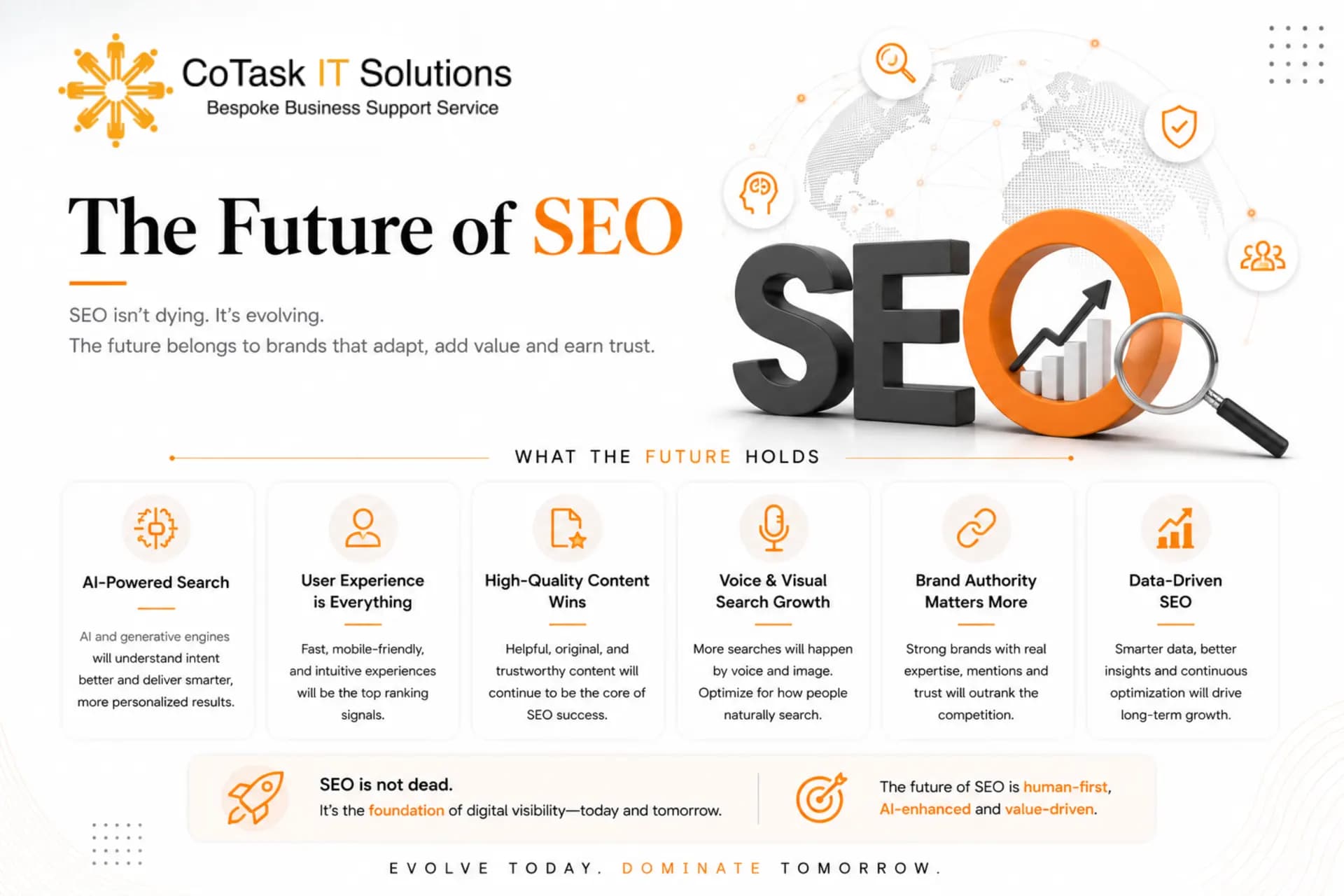
The Future of SEO
SEO is moving beyond keyword optimization.
Future strategies will combine:
- High-quality content
- User experience
- AI optimization
- Structured data
- Semantic search
- Conversational content
- Entity-based optimization
- Topical authority
Businesses that adapt to these changes will remain visible, even as search continues to evolve.
The future of SEO is about answering questions better than anyone else—not just ranking for keywords.
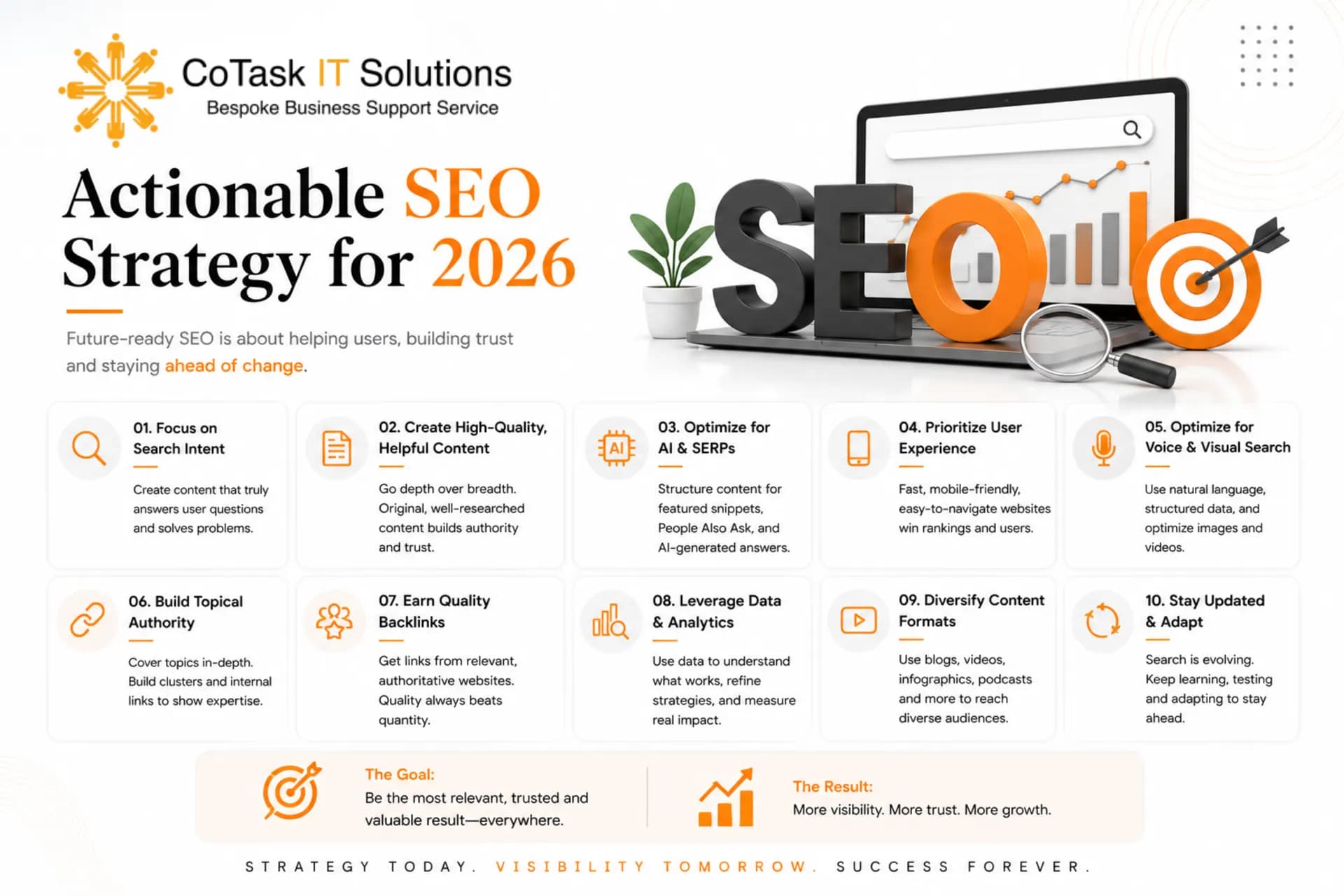
Actionable SEO Strategy for 2026
Follow this checklist to stay ahead.
- ✅ Understand user intent before writing.
- ✅ Create original, experience-based content.
- ✅ Use clear headings and logical structure.
- ✅ Optimize for featured snippets and AI Overviews.
- ✅ Publish comprehensive articles instead of thin content.
- ✅ Improve page speed and mobile experience.
- ✅ Add structured data where appropriate.
- ✅ Build internal links between related articles.
- ✅ Earn high-quality backlinks naturally.
- ✅ Regularly update existing content.
Final Takeaways
Remember these key points:
- SEO is not dead—it is evolving.
- AI has changed search behavior, not the need for trustworthy content.
- Google still relies on high-quality websites.
- AI assistants need reliable sources to generate answers.
- Businesses that combine SEO, AEO, and GEO will have a competitive advantage.
The question is no longer "Is SEO dead?"
The better question is:
"Is your SEO strategy ready for the AI era?"
Frequently Asked Questions
Conclusion
So, is SEO dead?
The answer is a clear no.
SEO has changed significantly over the years, but change does not mean extinction. From mobile-first indexing to voice search and now AI-powered search experiences, SEO has continuously adapted to new technologies and user behaviors.
Today, success requires a broader approach. Traditional SEO remains the foundation for online visibility, while Answer Engine Optimization (AEO) helps your content appear in direct answers, and Generative Engine Optimization (GEO) increases the likelihood of being referenced by AI platforms like ChatGPT, Gemini, and Perplexity.
Instead of asking whether SEO is dying, businesses should focus on building trustworthy, user-first content that serves both people and AI systems. Those who embrace this evolution will be well-positioned to succeed in the future of search.
Ready to Future-Proof Your SEO Strategy?
At CoTasks IT Solutions, we help businesses grow with modern SEO, AEO, and GEO strategies designed for the AI era. Whether you want to improve Google rankings, increase visibility in AI-powered search, or generate more qualified leads, our experts can help you build a long-term digital growth strategy.
Get in touch with CoTasks IT Solutions today and start building your future-ready online presence.